It's a conundrum that the best and brightest of the tech industry haven't yet solved: how to get computers to the "next billion" customers in developing countries.
The highest-profile effort to date, called One Laptop Per Child, has run into a series of setbacks (BusinessWeek.com, 3/5/08). Spearheaded by digital guru Nicholas Negroponte, the U.N.-supported program envisions equipping millions of children in Africa, Asia, and Latin America with innovative $100 laptops. But demand for the devices has been lower than expected, in part because they still cost nearly twice their intended price.
Some people suggest perhaps the solution isn't to put hardware into the hands of every person, but rather to maximize the number of people who have access to a PC. That's the idea behind Paris startup Jooce (the name is a play on "juice," as in electricity), which has devised a novel software system that lets many people use a single machine as though it were theirs alone.
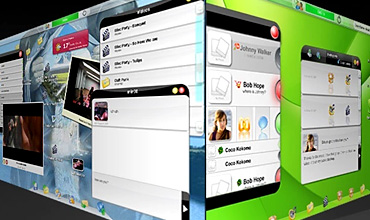
Whether in an Internet café or village kiosk, a PC equipped with Jooce software gives each person who logs in a customized environment—complete with programs, preferences, bookmarks, buddy lists, and so forth. That way, even though many people may use the machine each day, it feels "personal" to each one. Jooce also lets subscribers securely store an unlimited number of documents, photos, videos, and other data—as well as gives them the ability to share those files easily with other Jooce users.
Jooce's remarkable plan is to offer this capability for free. Revenues will be derived from targeted ads that will appear on Jooce screens. Though the company won't reveal the names of specific advertisers, it says soccer clubs, consumer-products companies, and even movie studios already have expressed interest in reaching likely clients. There are an estimated 500 million people around the world who access the Internet every day, but don't own—and can't afford—their own PCs.
That's an enormous opportunity. Taken together, only about 1 million low-cost computers have been sold into the developing world via Negroponte's OLPC initiative and rival schemes such as the Classmate PC from Intel (INTC) and the Eee from Taiwan's Asus, reckons industry analyst Roger Kay, founder of consultancy Endpoint Technologies. That means "…99% of the market is unpenetrated, so if somebody figures out a way to do this it should take off like a shot," Kay says.
Jooce is the brainchild of three young entrepreneurs who met while working on digital-divide policy at the Paris office of the International Chamber of Commerce. Chief Executive Stefan Surzycki is a 33-year-old Indiana native who started programming computers at the age of 7. He and co-founders Bryce Corbett, an Australian, and Aleks Stojanoski, from Macedonia, all were struck by the ease and power of Web-based software tools such as Hotmail, photo-sharing services, and online storage. Yet they felt online programs alone weren't enough to bridge the digital divide.
People in developing countries also needed a software interface that let them create and manage their online identities. Along with six other programmers, Surzycki got to work on the technology behind Jooce and managed to raise an undisclosed amount of funding from Luxembourg-based venture capital firm Mangrove Capital Partners, one of the original backers of Skype (EBAY).


Advertising | Special Sections | MarketPlace | Knowledge Centers | Terms of Use | Disclaimer | Privacy Notice | Ethics Code | Contact Us | Careers
Copyright 2000-2008 by The McGraw-Hill Companies Inc. All rights reserved.