NBC, msnbc.com and news services NBC, msnbc.com and news services
updated 44 minutes ago 2011-03-05T07:52:26

Libyan leader Moammar Gadhafi's forces broke through rebel defenses at the city of Zawiya Saturday, witnesses said after a battle in which dozens of people were killed.

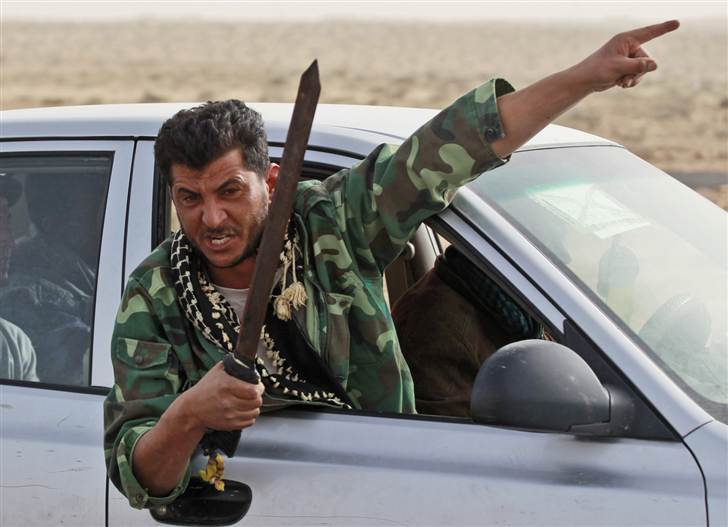
The attack on the city, about 30 miles west of Tripoli, saw an improvised force of rebels armed with hunting rifles and swords take on troops from the elite Khamis Brigade — named after the son of Gadhafi who commands it.

The witnesses said that forces loyal to the regime had overcome rebel positions with tanks, heavy mortar shelling, machinegun fire.

The rattle of gunfire and explosions could be heard as they spoke to The Associated Press by phone. They did so on condition of anonymity because of fears for their safety.

They added that several fires were raging in Zawiya Saturday.

  1. Top stories: Turmoil in the Middle East
    1. Libya rebels losing one city, but take another
    2. Libya has 'significant' stockpile of chemical weapons
    3. Tripoli - a city in a bubble
    4. Internet goes dark in Libya
    5. What you need to know about the Mideast unrest

"Now with all the artillery, tanks and armored vehicles, we're seeing battles and killings we haven't seen in Iraq. I consider it total genocide," said one witness who spoke to Al-Arabiya television.

"The battles have now entered the city. More than 15 armored vehicles entered two hours ago along with a tank. There is heavy firing in all the areas and mosques have announced 'jihad' against these brigades," the man told Al-Arabiya.

Al-Jazeera television news carried similar reports about fighting in Zawiya and said tanks had fired on homes.

"There is heavy bombing of the city by tanks and heavy weapons and mortars — the rebels are struggling to resist with very primitive means. They [invading forces] have no mercy and are very brutal. There is a large number of injured and a lot of people killed on the streets," a witness, Ahmed, told Al-Jazeera by telephone.

'We will die here'
He said he was speaking from the central Martyrs' Square in Zawiya where he and other rebels had been surrounded by tanks. Artillery and machine gun fire could be heard in the background.

"There is no mercy to civilians ... there is a very tragic situation happening right now. It's a very serious situation. We were expecting the world to intervene, but they have let us down. Shelling is now coming in from all sides," Ahmed told Al-Jazeera.

"We have made up our mind that we will die here. Where is the United Nations or the Arab League or the international community who have spoken about our rights or protecting us? I don't think they meant what they have said," he added.

Al-Jazeera reported that hospital medics claimed to have seen injured people on Zawiya's street being executed and that ambulances had been attacked.

After a number of failed attempts to take the city, the troops on Friday launched a fresh offensive, bombarding Zawiya's western edges with tanks and anti-aircraft guns, several residents said.

Video: Libyan rebels lose ground in Zawiya (on this page)

The rebels had said Friday they were still in control of the central square, but admitted that the soldiers had taken the small town of Harsha, on the city's outskirts, after heavy fighting.

"Dozens were killed and more were wounded. We have counted 30 dead civilians. The hospital was full. They could not find space for the casualties," a Zawiya resident identified only as Mohamed told Reuters by telephone Friday.

"People used swords and hunting rifles to defend Martyrs Square. Even mothers used those weapons," he added.

    1. Gadhafi's forces break through Libya rebel lines

      Updated 42 minutes ago 3/5/2011 7:52:26 AM +00:00 Libyan leader Moammar Gadhafi's forces broke through rebel defenses at the city of Zawiya Saturday, witnesses said after a battle in which dozens of people were killed. Full story

    2. Libya has 'significant' stockpile of chemical weapons
    3. Art of U.S. diplomacy in arms sales revealed
    4. Suspect's gun jammed during airport shootings
    5. Nepal's former Prime Minister Bhattarai dies at 87

The death toll from the fighting at Zawiya was unclear. On Friday, The Associated Press quoted a witness at Zawiya's hospital as saying 18 people had been killed and 120 wounded. Another resident told Reuters that between 40 and 50 people were killed in the clashes.

Interactive: Key events, players in Libya (on this page)

The commander of the rebel forces in Zawiya — Hussein Darbouk — was among those killed, Alaa al-Zawi, an activist in the city, told the AP.

Darbouk, an army colonel who defected along with other troops in Zawiya early on in the uprising, was shot to death by fire from an anti-aircraft gun, he said.
Rebel flag flies in eastern town
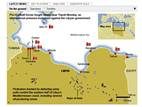
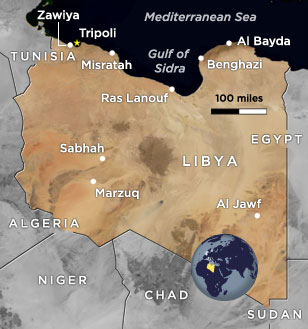
However, in the east, the town of Ras Lanuf was largely calm with the rebel flag flying over it after opposition forces drove out loyalist troops Friday.

The rebels opened fire on a helicopter flying overhead Saturday, a Reuters correspondent in the town reported, but otherwise there was no sign of Gadhafi's forces.

At a checkpoint at the entrance to the town Saturday, there was a rebel checkpoint, manned by half a dozen soldiers.

Asked if rebels were in charge of the whole town, one soldier replied: "Everything, 100 percent, it is completely safe."

Hoisted over a roundabout in the town was the Libyan flag that pre-dates the military coup that brought Gadhafi to power four decades ago, the symbol adopted by the rebels.

"We control Ras Lanuf, the port, airport, the oil company and the residential area," said Ahmed Aljili, a rebel fighter in Ras Lanuf.

A day earlier, flashes and thuds had resounded from fighting around the area of Ras Lanuf, a major oil terminal of the OPEC producer that sits on the Mediterranean coast. Helicopters had strafed positions of rebels, who fired rifles back.

In developments Friday:

  • An explosion at an ammunition depot near Libya's rebel stronghold of Benghazi killed at least 17 people and injured 18, hospital officials said.
  • Interpol delivered a global "Orange Notice" alert for Gadhafi and 15 members of his inner circle to help police worldwide enforce U.N. sanctions. An "Orange Notice" is not an arrest warrant but is issued to help countries track down illegal assets or suspects wanted for extradition.
  • Two Red Crescent medics were wounded by Gadhafi troops as they tried to retrieve a body near Misrata, Amnesty International reported.
  • A Libyan warplane bombed just beyond the walls of a military base used to store huge amounts of ammunition and now held by rebels in the eastern town of Ajdabiya but did not hit it.
  • Two vessels carrying 1,300 U.S. Marines docked Friday at an American base on Crete as part of a military build up around Libya, the U.S. Navy said. Souda Bay navy base spokesman Paul Farley said the amphibious assault ship USS Kearsarge and the USS Ponce arrived at the base, carrying a total of around 4,000 personnel, including the Marines.
  • Two U.S. Air Force cargo planes also flew blankets, water and other relief supplies to Tunisia on Friday as part of an international effort to help refugees who fled from the fighting in Libya.

The Associated Press and Reuters contributed to this report.

Photos: Unrest in Libya - Week 2

loading photos...
  1. A Libyan rebel holds a sword as he rides in a car to the battlefront near Ras Lanuf, west of the town of Brega, eastern Libya, Friday, March 4. Forces opposing Libyan leader Moammar Gadhafi vowed "victory or death" as they advanced toward a major oil terminal, calling for foreign air strikes to set up a "no-fly" zone after three days of bombardments by Gadhafi's warplanes. (Kevin Frayer / AP) Back to slideshow navigation
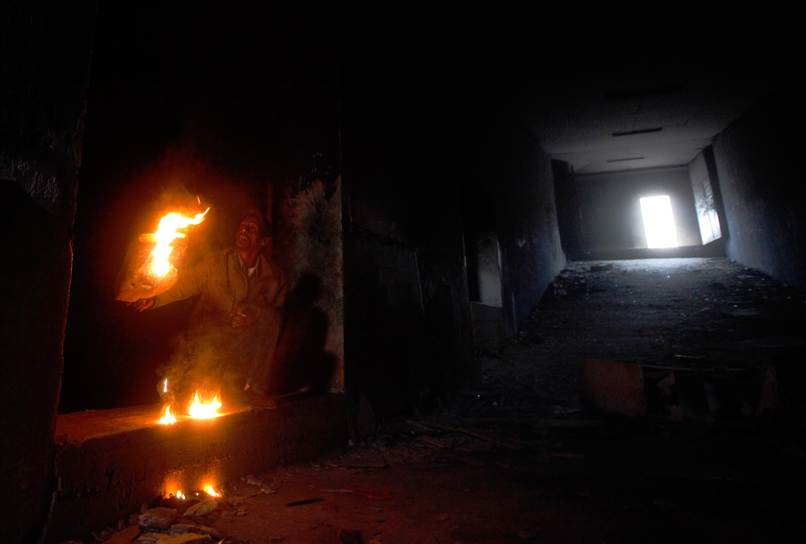
  2. A man lights a fire to look at the underground prisons that were part of the headquarters for forces loyal to Gaddafi, in Benghazi on March 4. (Suhaib Salem / Reuters) Back to slideshow navigation
  3. Editor's note:
    This image contains graphic content that some viewers may find disturbing.

    Click to view the image, or use the buttons above to navigate away.

    Doctors and volunteers move the body of a man who was killed during clashes in Ras Lanouf in the eastern city of Ajdabiya, Libya, on March 4. (Tara Todras-Whitehill / AP) Back to slideshow navigation
  4. Medics remove shrapnel from the foot of an injured rebel militiaman, on March 4 in a hospital in Benghazi. (John Moore / Getty Images) Back to slideshow navigation
  5. An anti-Gadhafi rebel shouts after hearing government aircraft near Ras Lanuf, west of the town of Brega on March 4. (Kevin Frayer / AP) Back to slideshow navigation
  6. Libyan police fire tear gas at anti-Gadhafi protesters in the Tajoura district of eastern Tripoli on March 4. The protest came in defiance of a fierce crackdown by regime supporters that has spread fear in the capital. (Ben Curtis / AP) Back to slideshow navigation
  7. Anti-Gadhafi protesters flee tear gas fired by police during the demonstration in the Tajoura district of eastern Tripoli on March 4. (Ben Curtis / AP) Back to slideshow navigation
  8. Men from Bangladesh, who used to work in Libya but recently fled the unrest, head to a refugee camp after crossing the Tunisia-Libyan border in Ras Jdir, Tunisia, on March 4. (Emilio Morenatti / AP) Back to slideshow navigation
  9. A picture grabbed on March 4 from Libyan television shows two of the three Dutch soldiers, left and right, captured by Libyan armed forces while attempting to rescue civilians on Feb. 27. The Netherlands defense ministry said "intensive negotiations" are under way to secure the liberty of soldiers. (AFP - Getty Images) Back to slideshow navigation
  10. Anti-Gadhafi protesters participate in Friday prayers at the court square in Benghazi, eastern Libya, March 4. (Hussein Malla / AP) Back to slideshow navigation
  11. A rebel sleeps next to an anti-tank weapon on a checkpoint in Brega on March 4. (Goran Tomasevic / Reuters) Back to slideshow navigation
  12. A rebel holds his rifle at a checkpoint in Brega March 4. (Goran Tomasevic / Reuters) Back to slideshow navigation
  13. A rebel from the forces opposing Moammar Gadhafi holds a rocket-propelled grenade as he arrives with others to re-enforce at a position outside Ajdabiya, eastern Libya, on March 3. (Kevin Frayer / AP) Back to slideshow navigation
  14. The tented village for displaced people fleeing from unrest in Libya, at the Tunisia-Libyan border, in Ras Jdir, Tunisia, on March 3. The camp was built to handle the large numbers of people crossing the border from Libya and currently houses about 5,000. (Lefteris Pitarakis / AP) Back to slideshow navigation
  15. An Egyptian woman holds her child while waiting to cross the frontier to Tunisia, at a border point in Ras Judeir, Libya on March 3. (Ahmed Jadallah / Reuters) Back to slideshow navigation
  16. Egyptians try to board a bus as a Tunisian army soldier tries to stop one of them at the Tunisia-Libya border, in Ras Ajdir, Tunisia, March 3. (Emilio Morenatti / AP) Back to slideshow navigation
  17. Rebels hold a young man at gunpoint between the towns of Brega and Ras Lanuf on March 3. He was accused of being loyal to Libyan leader Moammar Gadhafi. (Goran Tomasevic / Reuters) Back to slideshow navigation
  18. People attend the funerals of a Libyan rebel in Benghazi on March 3. The Libyan rebel was killed the previous day while defending a strategically important oil refinery town from a regime counter-attack in Brega, as five others fighters were also buried in Ajdabiya, 94 miles to the west. (Marco Longari / AFP - Getty Images) Back to slideshow navigation
  19. The family members of anti-government tribal revolutionary rebels who were killed March 2 after armed clashes with pro-Libyan leaders in Brega, cry in front of a hospital before burying them in cemetery in Ajdabiya area on March 3. (Asmaa Waguih / Reuters) Back to slideshow navigation
  20. A Bangladeshi migrant worker washes himself in a puddle of water at the Libyan and Tunisian border crossing of Ras Jdir after fleeing unrest in Libya on March 3. (Zohra Bensemra / Reuters) Back to slideshow navigation
  21. Rebel fighters celebrate after advancing on the front line against Libyan government forces on March 2 in Brega, Libya. The rebels drove out troops loyal to President Moammar Gadhafi from the coastal town after the government forces had taken it overnight. (John Moore / Getty Images) Back to slideshow navigation
  22. New recruits in the new revolutionary army of Libya get a quick course in how to use anti aircraft weapons in Benghazi, Libya on March 2. Media reports stated on March 3 that rebels in Libya have fought off an attempt by troops loyal to Libyan leader Moammar Gadhafi to retake the eastern oil port of Brega. (Weiss Andersen Flemming / EPA) Back to slideshow navigation
  23. A wounded rebel fighter is carried into a hospital after being hit with shrapnel on the front line with Libyan government forces on March 2 in Brega. (John Moore / Getty Images) Back to slideshow navigation
  24. A rebel holds his ears as a bomb launched by a Libyan air force jet loyal to Libya's leader Moammar Gadhafi explodes in the desert near Brega on March 2. (Stringer/brazil / Reuters) Back to slideshow navigation
  25. A Libyan rebel holds RPG rockets as he celebrates after rebels retake the town of Brega from pro-Moammar Gadhafi fighters in eastern Libya on March 2. (Hussein Malla / AP) Back to slideshow navigation
  26. Libyans wave their old national flag as others celebrate burning copies of the green book authored by Libyan ruler Moammar Gadhafi in Benghazi on March 2. (Roberto Schmidt / AFP - Getty Images) Back to slideshow navigation
  27. Libyan leader Moammar Gadhafi waves upon his arrival for a ceremony of loyalists to mark 34 years of "people power" in Tripoli on March 2. He vowed to fight an uprising to "the last man, the last woman." His speech came as the U.N. refugee agency made a plea for hundreds of planes to end a gridlock at the Tunisia border with Libya, where "acres of people" fleeing the violence were still waiting to cross. (Mahmud Turkia / AFP - Getty Images) Back to slideshow navigation
  28. Libyan men walk over sand dunes in order to fight forces from the Libyan army, near the eastern town of Brega on March 2. (Tara Todras-whitehill / AP) Back to slideshow navigation
  29. Rebels wave a Kingdom of Libya flag as they ride on top of a tank on the outskirts of Ajdabiyah, on the road leading to Brega on March 2. The flag which was used when Libya gained independence from Italy in 1951, has been used as a symbol of resistance against Libya's leader Muammar Gaddafi in the recent protests. (Goran Tomasevic / Reuters) Back to slideshow navigation
  30. Anti-government rebels undergo weapons training in a military base in Benghazi on March 2. (Asmaa Waguih / Reuters) Back to slideshow navigation
  31. Civilians who have volunteered to join the rebel army register their names in a school in Benghazi on March 2. (Suhaib Salem / Reuters) Back to slideshow navigation
  32. A man holds up a poster of Gadhafi, one of several distributed among a crowd gathered to view a burning fuel truck in Tripoli on March 2. (Chris Helgren / Reuters) Back to slideshow navigation
  33. Bangladeshi migrant workers wait near the Tunisian gate at the Libyan and Tunisian border crossing of Ras Jdir after fleeing unrest in Libya on March 2. (Zohra Bensemra / Reuters) Back to slideshow navigation
  34. Relatives of Bangladeshi workers in Libya wait outside the Dhaka international airport in Dhaka, Bangladesh, on March 2. The United Nations says its migration agency has chartered flights to bring home nearly 400 Bangladeshis from Libya after they fled the violence there to the borders of Tunisia and Egypt. (Pavel Rahman / AP) Back to slideshow navigation
  35. An Egyptian watches the amphibious assault ship USS Kearsarge as it sails at the Suez canal in Ismailia, Egypt, on March 2. Egyptian officials say two U.S. warships have entered the Suez Canal on their way to the Mediterranean, moving closer to the Libyan coast. (Str / AP) Back to slideshow navigation
  36. A man opposed to Gadhafi holds a Kalashnikov rifle in Zawiyah, about 30 miles west of the capital Tripoli, on March 1. Libya could descend into civil war if Gadhafi refuses to quit, the United States said. (Ahmed Jadallah / Reuters) Back to slideshow navigation
  37. Evacuees of different nationalities who fled the unrest in Libya line up for food at a refugee camp near the Libyan and Tunisian border crossing of Ras Jdir on March 1. (Zohra Bensemra / Reuters) Back to slideshow navigation
  38. Pro-Gadhafi security forces stand near a checkpoint on a street in Qasr Banashir, southeast of Tripoli, on March 1. Government opponents in rebel-held Zawiya repelled an attempt by Gadhafi forces to retake the city closest to the capital in six hours of fighting overnight, witnesses said. (Ben Curtis / AP) Back to slideshow navigation
  39. Indian workers attempt to get on a ship leaving for Egypt in the eastern city of Benghazi on March 1. (Tara Todras-Whitehill / AP) Back to slideshow navigation
  40. Pro-Gadhafi supporters stage a rally as foreign journalists arrive on a government-provided tour in Sabratha, Libya, Feb. 28.  (Ben Curtis / AP) Back to slideshow navigation
  1. Image:
    Kevin Frayer / AP
    Above: Slideshow (39) Unrest in Libya - Week 2
  2. Image:
    Ben Curtis / AP
    Slideshow (70) Unrest in Libya - Week 1
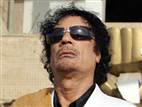
  3. Image: Moammar Gadhafi
    Patrick Kovarik / AFP - Getty Images
    Slideshow (32) Moammar Gadhafi through the years

Timeline: Recent Middle East unrest

Explainer: Overview of Libya's oil resources

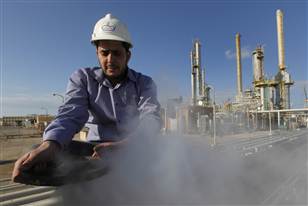
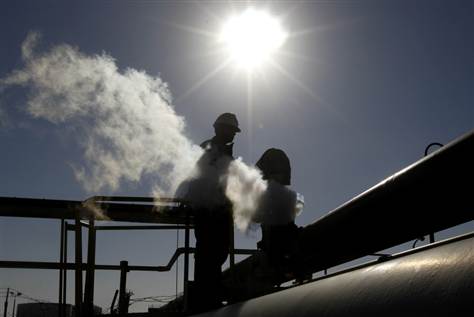
  • Image: A Libyan oil worker, works at a refinery inside the Brega oil complex
    AP

    OPEC member Libya is the 17th largest producer in the world, third largest producer in Africa and holds the continent's largest crude oil reserves. It normally pumps around 1.6 million bpd, 85 percent of which is exported to Europe and its output is equivalent to about 2 percent of global oil consumption.

  • Libya's place in the oil producing world

    How the country measures up in crude supplies and production.

  • Exports

    Libya is a net exporter with domestic consumption estimated at only around 270,000 bpd.

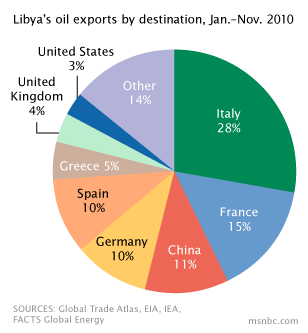
    Europe is the customer most affected by Libyan oil export disruptions. About 28 percent of the oil goes to Italy, 10 percent to Germany, 11 percent to China and France and 3 percent to the United States.

    Libyan oil accounts for about 23 percent of Ireland's oil and about 22 percent of Italy's, according to the IEA.

    Around 13 percent goes east of the Suez Canal to Asia.

    Buyers have said the shortage can be covered by alternative sources such as Nigeria and Azerbaijan, which produce similar light crude oils to Libyan oil.

    Saudi Arabia is pumping around 9 million barrels per day and has spare capacity of around 3.5 million bpd, according to Saudi sources. The kingdom has promised to fill any supply gap caused by the unrest in Libya although it produces heavier crude with higher sulfur content than Libya.

  • Infrastructure

    Oil fields
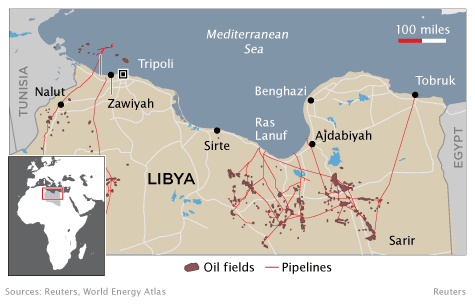
    Most of Libya's oil fields are located in and around the Sirte Basin, in the northeastern part of the country, which contains around 80 percent of the country's proven reserves.

    Other key areas include the Ghadames Basin, about 240 miles south of Tripoli and Cyrenaica Basin in the northeast and the Murzuq oil field in the desert in the south of the country.

    Libya has five domestic refineries with a combined capacity of 378,000 barrels a day:

    Azzawiya Oil Refining Co
    Sarir Refining
    Sirte Oil Co
    Tobruk Refining
    Ras Lanuf Oil & Gas Processing Co

    Ports
    Libya exports various grades of light crude from six major terminals, five of which are located in the eastern part of the country, where protests erupted near the second city of Benghazi.

    Following are the eastern terminals with loading volumes in January, provided by the IEA.

    Es Sider 447,000 barrels per day
    Marsa El Brega 51,000 bpd
    Ras Lanuf 195,000 bpd
    Tobruk 51,000 bpd
    Zueitina 214,000 bpd
    Zawiyah 199,000 bpd (January exports)
    Oother unspecified terminals 333,000 bpd

  • Companies

    Image: Libyan oil worker, works at a refinery inside the Brega oil complex
    AP

    Libya's state company
    Libya's oil industry is run by the state-owned National Oil Corporation (NOC), which is responsible for managing exploration and production sharing agreements with international oil companies. Along with smaller subsidiary companies, the NOC accounts for around 50 percent of the country's oil output.

    Foreign players
    Major oil companies operating in Libya include:

    BP (Great Britain)
    ConocoPhillips (United States)
    Eni (Italy)
    ExxonMobil (United States)
    Hess Corp (United States)
    Marathon (United States)
    Occidental Petroleum (United States)
    OMV (Austria)
    Repsol (Spain)
    Shell (United States)
    Statoil (Norway)
    Wintershall, a unit of BASF (Germany)

Discuss:

Discussion comments

Most active discussions

  1. votes comments
  2. votes comments
  3. votes comments
  4. votes comments
  1. Jump to text

    Libyan leader Moammar Gadhafi's forces broke thr...

  2. Jump to video

    Libyan rebels lose ground in Zawiya

  3. Image:
    Kevin Frayer / AP
    Jump to photos

    Unrest in Libya - Week 2

  4. Jump to timeline

    Recent Middle East unrest

  5. Image: A Libyan oil worker, works at a refinery inside the Brega oil complex
    AP
    Jump to explainer

    Overview of Libya's oil resources

  6. Jump to discussion

    Gadhafi's forces break through Libya rebel lines

Login &
settings
Email this
to a friend
Share this on Facebook
Share this on Twitter
New comment notifications
hide tools